
AI Content vs AI-Built Content

I’ve been head-down building content with AI for the last year, and I’ve started to realize a few things.
AI content? Yeah… it’s mostly bad. We all know it. But, AI-built content though is a different story. That can be really, really good…if you know what you’re doing.
And that’s the gap I keep seeing.
It’s not the tools. It’s how people use them. Most of the time, AI gets treated like a shortcut, “write this,” “create that,” “make it better,” with no real structure behind it. And the output shows it.
But if you approach it differently, it starts to click. And, when it comes to task requests, AI bots (like ChatGPT and Claude) are a lot like unpaid interns who are chained to their desks.
Once you see it that way, the rest of this starts to make a lot more sense.
ChatGPT is Basically an Unpaid Intern
Think about how you actually use it. How often are you prompting it again… correcting it… reminding it what you already said?
That’s not a tool. That’s management.
If you ask it to “write a blog post to sell air conditioners to homeowners,” you’ll get the most generic, recycled garbage imaginable. Because that’s what it’s trained on.
But you wouldn’t give that prompt to an intern and expect something great, right? You’d at least:
- give them brand guidelines, voice, facts
- make sure they understand the assignment
- ask for an outline before a draft
- pressure test the angle or POV
Same exact thing applies here.
Even when you say “act like an expert,” you’re getting the most generic expert possible. No stakes. No real experience. No consequences if it’s wrong.
So structure matters.
Give AI bots direction. Give it constraints. Give it a job to do—not a blank page.
Otherwise you’re just letting a garbage truck dump content all over your screen.
Not All AI Bots Are Created Equal
This took me longer than it should have to figure out. At first, I thought ChatGPT was the gold standard because it can do everything. But “does everything” also means… it’s not great at staying consistent.
You can build workflows, rules, prompts—but over time it drifts.
Outputs suddenly change. Formatting breaks. Simple instructions like “output in HTML” suddenly turn into simple text, or worse, markdown language.
Needless to say, it gets… loose.
But, then I tried Claude and had a completely different experience. The hardest change is that you don’t really chat with it. You prepare the work, you think through the task, define the rules, build the structure—and then let it execute.
And it sticks to the assignment way better over time.
It’s less about conversation… more about systems.
At that point, you’re not managing the intern anymore—you’re giving it a system it can actually follow.
Garbage In, Gets Your Garbage Out
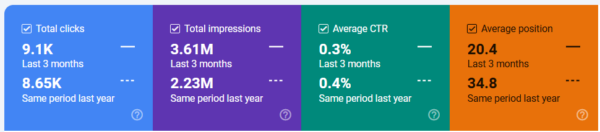
Yes, I know it’s cliché, but it’s still the rule. I’ve seen (and experienced) AI content that looks great at launch… and then falls off hard 90–120 days later.
And while seasonality plays a role, the bigger issue is this:
AI shouldn’t replace the thinking.
It should replace the busywork.
Content production has a ton of overhead: emails, reviews, handoffs, task management, status updates.
That’s where I’ve found that AI actually shines.
Automating the movement of content from research → outline → draft → review → publish can save days on every project.
So before I’m even thinking about keyword strategy… I’m thinking about how to maximize the workflow.
If You’re Doing Strategy, This Changes Everything
But if you’re sitting higher in the process (like I am), doing strategy and research…having:
- keyword data
- SERP analysis
- competitor insights
- your own performance data
all in one place? That changes everything.
You spend less time gathering… and more time actually thinking.
This Is Where Most People Get It Wrong
Layer in automation on top of that, and now you’re not just producing content—you’re building a system that compounds over time.
And this is where most people still miss it. They’re focused on “writing a blog post.”
I’m focused on:
- producing more high-quality content than expected
- making it usable across every channel
- and getting it distributed without friction
I mean, there’s no reason a “how-to guide” should only exist as a blog post.
Record it.
Turn it into email.
Break it into short-form.
Reuse it everywhere.
Automate the process. Produce something actually worth reading. Then make sure people see it.
That’s SEO.